
Pamukkale Travel Guide: Travertines and Hierapolis
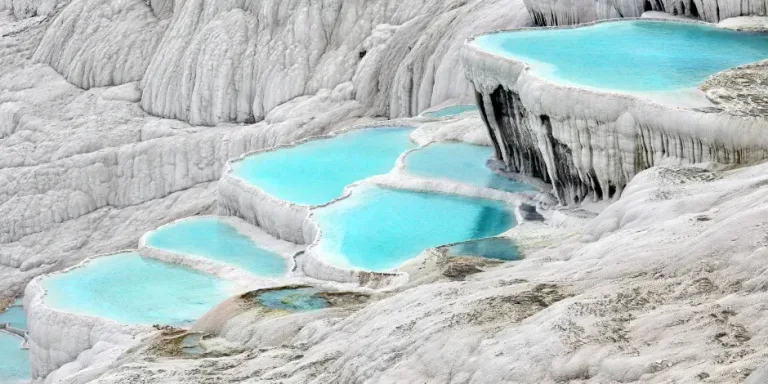
Discover Pamukkale, a healing center since ancient times. Practical tips for walking on travertines, swimming in the Ancient Pool, and touring Hierapolis.
Located within the borders of Denizli province and sculpted by nature like a colossal sculptor, the travertines, resembling a white cotton castle (or a frozen waterfall) from afar, have been the number one destination for those seeking healing for thousands of years. So much so that even during the magnificent Roman Empire, this region was preferred by kings, nobles, and wealthy merchants for treatment or as a "retirement city," and today it maintains its enchanting allure for modern-day travelers.
However, to fully experience Pamukkale, simply taking off your shoes and "walking on the white steps" is definitely not enough. You need to swim in the ancient pool where marble columns have collapsed, pass through one of Anatolia's largest and most mysterious cemetery areas (Necropolis), climb the massive theater where gladiators fought, and witness the magical red hues of the sunset.
We are starting our step-by-step Pamukkale and Denizli travel guide, prepared for you to explore this enchanting geography, which will be one of the most beautiful routes of your Aegean or Mediterranean tour, not as a tourist but as an explorer.

🎒 Smart Traveler's Notes: Things to Know Before You Go
Vital little details determine the comfort of your vacation:
- 👟 Strict Footwear Rule: To preserve the delicate whiteness, natural texture, and prevent moss growth of the travertines, walking with shoes, slippers, or even water shoes is strictly prohibited in certain areas. You can only enter barefoot. Be sure to bring a backpack or bag to easily carry your shoes.
- 🚪 Which Gate to Enter?: There are three different entrance gates to the site. The easiest and most direct access to the ancient city of Hierapolis, museums, and the most beautiful spots of the travertines is from the "South Gate". The largest parking area is also located at this gate. (If you want to climb from bottom to top, you can use the "Town" entrance, but it is tiring).
- 🎫 Museum Pass and Extra Fees: The "Museum Pass" of the Ministry of Culture is valid at the entrance to the site (Pamukkale and Hierapolis). However, if you want to swim in the Ancient Pool (Cleopatra Pool) inside or do Paragliding, you need to pay an extra fee for these inside.
- ☀️ Scorching Sun Warning: The white travertines reflect sunlight onto your face like a mirror. If you are going in the summer, never start climbing without sunglasses (it can have an effect like snow blindness), high-factor sunscreen, and a hat.
1. Pamukkale Campus: 3 Main Stops to See
🏔️ 1. Travertines (Magic of White)
These limestone steps, formed by the precipitation of "calcium bicarbonate" in the thermal underground waters when it comes into contact with oxygen, are literally a miracle of nature. Visitors can walk barefoot in specially designated terraced pools, sit and relax in the healing hot shallow pools, and take great photos against the magnificent Çürüksu Valley (Lykos) view. (Note: The water temperature is generally 35 degrees and is warm even in winter).
🏛️ 2. Hierapolis Ancient City (Holy City)
This massive city, starting right where the travertines end and founded by the Kingdom of Pergamon in the 2nd century BC, takes its name from the Amazon queen Hiera. Thousands of Romans flocked to this city, believing in the healing power of thermal water, which is why the city was called the "Holy City."
The most magnificent and best-preserved structure of the city is the approximately 12,000-seat capacity Ancient Theater nestled against the hillside. Additionally, the approximately 2-kilometer-long "Necropolis" (Cemetery) area houses the largest and most diverse tomb structures (tumuli, sarcophagi) in Anatolia.

🏊♀️ 3. Cleopatra (Ancient) Pool
This is not an ordinary swimming pool or thermal facility. As a result of a massive earthquake in the 7th century AD, the giant marble columns on the main street (Agora) of the ancient city toppled into a large pit, and thermal water from underground filled this pit.
Swimming in this bubbly and healing water, which is exactly 36 degrees (body temperature) year-round, and jumping over the marble-engraved columns that are thousands of years old, is truly a unique experience in the world. (There are cafes and lockers around the pool).
2. Expand the Route: Nearby Treasures Accessible by Car
While you're in Pamukkale, it would be a great loss not to see Denizli's other hidden historical and natural beauties. Short but full routes you can take with your rental car:
🏺 Laodicea (Laodikeia) Ancient City
Located just 10 km (15 minutes by car) from Pamukkale, this massive city is very critical for the Christian world. It hosts one of the 7 major churches (Seven Churches) mentioned in the Bible (Book of Revelation) and has a special letter written to it, making it a pilgrimage point for faith tourism. With the recent magnificent excavation and restoration works, the gigantic "Syria Street," temples, and theaters are as impressive as Ephesus.
🦇 Kaklik Cave (Underground Pamukkale)
Located about 45 km from Pamukkale, in the Honaz district. This is literally "Underground Pamukkale." The travertines formed by the sulfurous thermal waters inside the cave have turned into an interesting green-white color due to mossing, as they do not see sunlight. If you can withstand its sulfurous smell (rotten egg smell), it is a magnificent natural monument.
🔴 Karahayit Hot Springs and Red Water
The town of Karahayit, just 5 kilometers beyond Pamukkale, is famous for its "red and orange" travertines, not white. The water boils at about 60 degrees and dyes the rocks red due to its high iron oxide content. The mud baths in the town are excellent for rheumatic diseases.
🍽️ Gastronomy Stop: Famous Denizli Kebab
To relieve the fatigue of the trip and fully taste the city, never return without going down to the Denizli city center (Bayramyeri side) and eating the famous Denizli Kebab (Tandır Kebab). This lamb meat, cooked for hours in stone ovens with mastic wood, is traditionally eaten by hand, placed only between pita bread, without using a fork and knife.
Ready for a Grand Aegean Tour? 🚙
Pamukkale is often the heart of major Aegean-Mediterranean tours. From here, you can reach Lake Salda (Turkey's Maldives) in just 1 hour by car, then move on to Izmir Ephesus or directly to the Antalya Kaş coasts.
To complete this enjoyable culture and nature tour without being dependent on tour buses, with the most comfortable vehicles and entirely on your own schedule, LenaCars is always by your side.
Explore Comfortable Cars → 📞 24/7 Travel Support*You can instantly pick up your vehicle from Denizli Çardak Airport (DNZ) or Izmir Adnan Menderes Airport (ADB).