
Driving Techniques in Rainy Weather: 9 Golden Rules
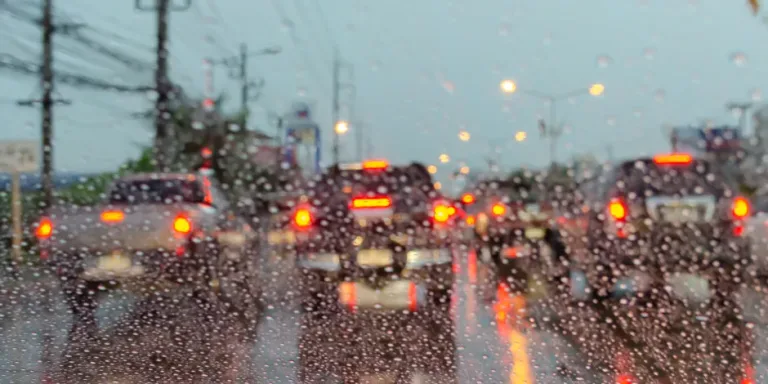
Rainy weather can threaten driving safety. From aquaplaning risk to braking distance, wiper control to defogging, discover the key points for safe driving.
For many drivers, going on a long journey or driving in the city in clear, sunny, and dry weather is as enjoyable and relaxing as the stress created by those first moments when the sky suddenly darkens and heavy rain begins. According to traffic safety statistics and accident reports, more than 40% of fatal and property damage traffic accidents occur because drivers fail to adapt to changing road and ground conditions in rainy weather in time.
Rainwater not only wets your windshield but also gets between the thin rubber layer of your tires that grips the asphalt and the ground, breaking the physical bond we call "grip" within seconds. This scenario completely changes the laws of physics, regardless of the vehicle's weight or model.
However, there is no need to panic or develop a fear of driving (Amaxophobia). With the right mechanical preparation, psychological calmness, and correct driving techniques, it is possible to have a safe, stable, and comfortable journey even in the heaviest monsoon rains.
In this comprehensive guide, you will find not only classic and memorized rules like "Drive slowly" but also lesser-known mechanical details that are literally life-saving, such as the "Cruise Control Trap", "Aquaplaning Crisis", "Defogging Strategy", and "Lane Selection Tactics" known by professionals.

1. Preparation Phase: Safety Begins Long Before the Ignition
If you woke up to a rainy and gray day or if the meteorology has issued a heavy rain warning, taking your vehicle directly onto the road is a big gamble. Before setting off, you need to spend just 2 minutes checking your vehicle's "rain shields" (mechanical safety elements). Here are the 3 critical and vital checkpoints before hitting the road:
🛞 1. Tire Tread Depth and Pressure
Your tires are the only point of contact your vehicle has with the ground (each one touches the ground only about the size of a palm). Although the legal limit according to traffic laws is 1.6mm, the tread depth must be at least 3mm for the water to be expelled (drained) from the grooves in the rain. Worn (bald) tires cannot drain water, and your vehicle will uncontrollably "float" on the water.
Also, having your tire pressure at the ideal (manufacturer) level is essential for splitting the water.
🌧️ 2. Health of Wiper Blades
Wiper blades that leave streaks on the glass, jump while working, do not clean the water completely, or make annoying squeaking noises have reached the end of their life. Not being able to clean the water with your wipers while driving at 100 km/h in the rain means "blind flying." Seeing in the rain is surviving. Always replace your wipers (especially since they dry and crack in the summer sun) before each winter.
💡 3. Visibility and Lighting System
Even during the day when it rains, the gray clouds and dense water droplets (spray effect) in the air significantly reduce visibility. Therefore, as soon as you hit the road, always turn on your low beams (not just the parking lights, but directly the low beams).
Having the headlights on is mandatory not so much for you to see the road better, but for other vehicles looking in the mirrors or coming from the opposite direction to "notice you" and for those coming from behind to adjust the distance (your brake lights will be on).
2. Behind the Wheel: Key Techniques

- ⚠️ "First 10 Minutes" (Hidden Ice) Rule:
The "first 10-15 minutes" when the rain starts, and you see those first drops falling on your windshield, is the moment when the risk of accidents is at its highest (peak). Why? Because the motor oil residues on the asphalt that have been dry for days, soot from exhaust gases, tire dust, and soil combine in the first moments when water falls, turning the road into a literal "oily and slippery soap" layer.
Before the heavy rain washes away and sweeps this dirty layer from the road (first 10 minutes), dramatically reduce your speed and be extra cautious.
- 📏 Following Distance: "Double" Rule
On dry surfaces, the safe following distance is "2 seconds" or half the speed. However, in rainy weather, the braking distance significantly increases. Although ABS (Anti-lock Braking System) prevents the wheels from locking, it does not shorten the stopping distance on wet surfaces; in fact, it may sometimes extend it. Therefore, increase your following distance without hesitation to "4-5 seconds" (or at least 80% of your speed).
When the vehicle in front suddenly hits a puddle and stops, those extra meters will save your life by allowing you to stop safely as well.
- 🪶 Feather-like, Smooth Maneuvers
On wet surfaces, your vehicle's balance (weight transfer) is much more sensitive. Avoid aggressive movements such as sudden braking, sudden acceleration at red lights, or sudden and sharp lane changes on the highway (turning the steering wheel). Treat the pedals and steering wheel as if they are made of feathers; all your movements should be smooth, predictable, and planned.
Sudden movements can cut off the tire's contact with the ground within seconds, causing the vehicle to spin (rotate around its axis).
🛑 The Biggest Fatal Mistake: Using Cruise Control
The biggest and most fatal mechanical mistake made on long roads in rainy weather, unfortunately unknown to many drivers, is leaving the "Cruise Control" system on.
When your vehicle enters an invisible puddle on the road ("Aquaplaning" situation), the contact between the wheels and the asphalt is lost, and the vehicle starts to slide on the water like a speedboat. During this sliding moment (since the friction with the ground is zero), the wheel speed instantly decreases. The open cruise control brain thinks the vehicle is climbing a hill or slowing down and suddenly gives full throttle (excess torque) to maintain speed.
When the vehicle exits the puddle and the wheels suddenly contact the dry asphalt with full throttle, the disaster occurs; the wheels spinning with incredible torque violently and uncontrollably throw the vehicle towards the barriers (causing it to spin). The moment you see the first drop of rain, speed control should be entirely manual, under your foot!
3. Advanced Professional Driving Strategies
🛣️ 1. Lane Strategy: Why the Middle Lane?
Modern highways and roads are built not flat but slightly cambered (sloping slightly from the center to the right and left) to prevent the accumulation and drainage of massive rainwater on the road. Due to this engineering structure, deep puddles, ponds, and mud always accumulate at the barrier edge of the far left lane or the far right (emergency) lane.
Using the "middle lane" as much as possible on multi-lane roads will largely protect you from falling into these deep water pits and sudden steering swerves.
🚚 2. Heavy Vehicle and "Blind Wave" (Spray) Danger
While driving on the highway, the massive, thick, and numerous tires of the Truck, Lorry, and Bus in front of you or in the adjacent lane throw the water masses on the road like a waterfall for meters (this is called the spray effect). Before overtaking or passing by a heavy vehicle, set your wipers to "fastest" mode.
As you pass right by, it will be as if a bucket of water is poured on your windshield, and your vision will be completely "zeroed" for 1-2 seconds. Do not panic during this blindness, do not suddenly brake or steer; gently lift your foot off the gas and keep the steering wheel straight and firm. Within seconds, your wipers will restore your vision.
🌫️ 3. The Enemy Inside: Window Fogging and A/C Usage
When it starts to rain, the outside temperature drops, and the warmth and humidity inside the vehicle (from your breath) increase. This temperature difference causes all windows to fog up (sweat) in a blinding way within seconds. Many drivers turn on the hot air to solve the fog, but the moist hot air worsens the situation.
Golden Rule: To eliminate the fog within seconds, direct the ventilation directly to the windshield and make sure to press the A/C button (even if the temperature setting is on hot). The air conditioning compressor is the only system that absorbs moisture from the air and instantly dries the window.
🌑 4. Night Rain: Double Risk and Prism Effect
When rain is added to the darkness of the night, the difficulty of driving reaches its peak. Wet and pitch-black asphalt reflects the headlights of oncoming vehicles, road lights, and traffic lights like a giant "mirror" or prism. Your eyes are seriously dazzled, and lane lines become invisible. In this situation, focus your gaze not on the opposite lane but on the white right lane or shoulder line just below your vehicle to maintain your route.
Never turn on your high beams; high beams will hit the raindrops and reflect back to you like a wall.
🚨 Life-Saving Emergency Prescription: What to Do During Aquaplaning?
When your vehicle rapidly enters a puddle, the tires cannot drain the water and rise onto the water. The engine speed suddenly increases, and the steering becomes "feather-light, bird-like" and unresponsive. This is the moment of "Aquaplaning" (Hydroplaning) when your tires lose contact with the ground, and you need to react correctly within seconds to escape this moment:
- NEVER, ever panic and slam on the brakes! (The wheels will lock, and the vehicle will spin like a top, rotating around itself).
- Do not turn the steering wheel left or right; keep it firmly in its current straight course.
- Gently (slowly) lift your foot off the gas pedal, not suddenly.
- The vehicle's weight and engine compression (engine braking) will naturally slow the vehicle, cut through the water mass, and the wheels will "pop" back onto the asphalt. At that moment, control is back in your hands.
Don't Leave Your Loved Ones and Safety to Chance 🛡️
In challenging weather conditions, sudden rains, or snowy surfaces, your greatest assurance is a well-maintained and new vehicle from an authorized service. LenaCars' premium rental car fleet prepares you and your family for all weather conditions with tires suitable for 100% seasonal conditions, wipers, perfectly functioning ABS/ESP braking systems, and regular periodic maintenance.
Rent a Safe Vehicle → 📞 24/7 Road Assistance and Support*All vehicles in our fleet are insured, and we offer 24/7 uninterrupted emergency road assistance. Safe driving wishes.