
The Prophecy of Algorithms: Reading the DNA of a Used Car

How is the value of a used vehicle determined in the data age? We delve into how algorithms working behind the scenes in the automotive industry shape car rental and purchasing decisions.
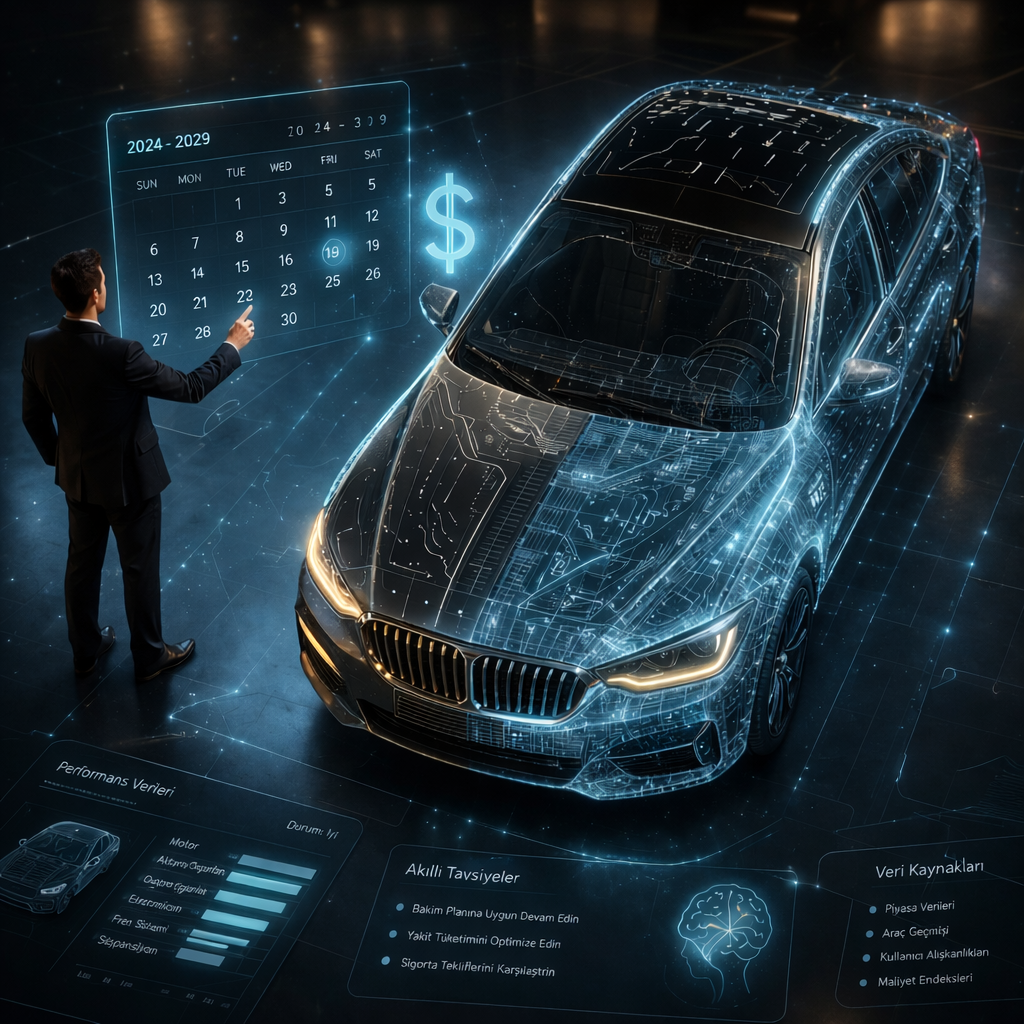
What do you see when you look at a car? A flawless chassis shining under the sun, aerodynamic lines cutting through the wind, the unique smell of leather seats, or perhaps the pure mechanical energy of hundreds of horsepower lying under the hood... All these are the romantic face of car passion. However, in the modern and ruthless data age, a car is much more than the pistons and gears under its hood.
It is a massive data center on wheels, a living log file producing gigabytes of information every second it glides on the roads.
The traditional used automotive sector was managed for years with the rough estimates of masters, simple measurements of paint thickness devices, and market gossip. But today, things have changed. Now, we revolve in a digital universe shaped not only by metal and plastic but also by data. In this universe, the true value of a vehicle is determined not by estimates in industrial sites but by the cold-blooded mathematics of algorithms processing millions of parameters per second.
It is time to move beyond the old-fashioned "is the engine blowing, is there any work on the chassis?" expertise and understand how algorithms, through machine learning models, draw the fate of a car, predict its future failures, and determine the most profitable financial strategy for companies. We embark on a deep journey into the prophecy of algorithms with LenaCars.
1. Digital Twin Technology and Database Architecture
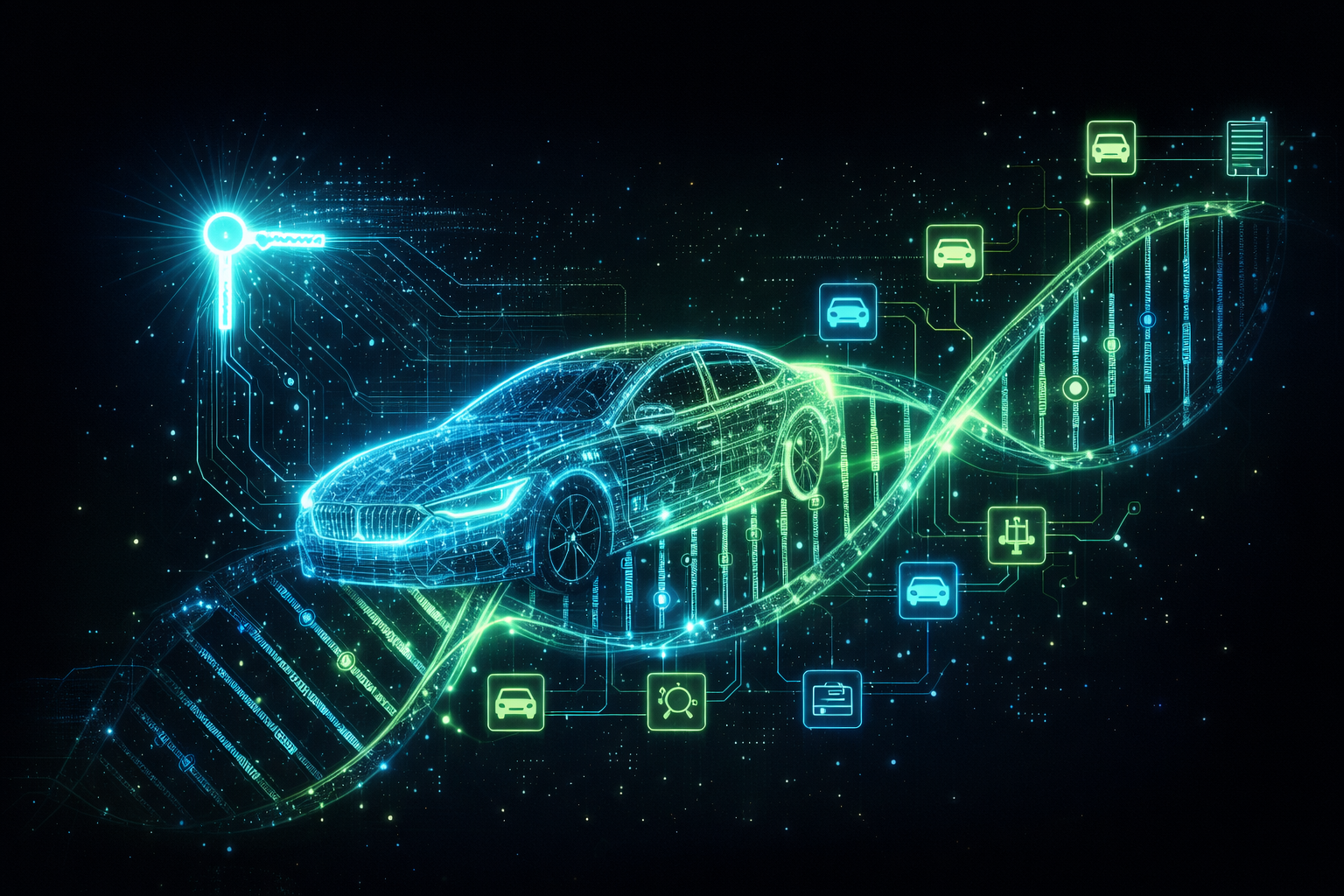
In the biological world, every person has a DNA sequence that makes them unique, inherited from their ancestors and containing their future health potential. In modern fleet and stock management systems, just like in vehicle networks positioned in advanced cloud architectures, each vehicle has a "Gene Map" that makes it unique in the digital universe.
Today, when designing automotive databases, a much more comprehensive structure is used instead of superficial license plate information or simple vehicle identification numbers (such as chassis numbers). Even a brand new 2026 model vehicle entering our database has a "Digital Twin" created starting from manufacturing tolerances. This concept is the creation of an exact virtual copy of a physical object.
Every bump the vehicle encounters on the road, every rev limiter the engine is exposed to, every sudden braking is processed into this digital twin through telematics sensors and OBD-II (On-Board Diagnostics) ports.
💡 Critical Concept: "vehicleKey" and Predictive MaintenanceIn our advanced backend systems, while processing data, instead of simply grouping vehicles with IDs, we always base it on the unique stock code represented by vehicleKey. This key code is a black box that gathers everything the vehicle has experienced throughout its life.
For example, a traditional master might listen to the engine sound and say "no problem." However, our algorithms delve into that vehicle's vehicleKey history; instantly analyzing a past 'P0420 Catalyst Efficiency' error, oxygen sensor replacement periods, and even thermal wear data on valve stem seals. In the used market, what determines a vehicle's current value and future expenses is how healthy the data under this vehicleKey is.
As the physical vehicle ages under the sun and asphalt, its "digital twin" in databases (e.g., in advanced Supabase architectures based on PostgreSQL) becomes smarter and more valuable every second. Algorithms surf these structured data pools to detect anomalies that the human eye could never catch. They can mathematically prove that delaying an engine oil change by 2,000 km will cause a 14% efficiency loss in the turbocharger system three years later.
2. The New Codes of Valuation: How Parameters Clash?
Judging a car's price by only looking at its model year and mileage is as shallow an approach as judging a book's quality by just its cover. Big Data offers us the opportunity to examine the vehicle in entirely different dimensions. Advanced valuation algorithms incorporate dynamic data into the equation alongside static data to determine the current market price.
- ✓ Part and Inflation Correlation: If a part has been replaced under the hood of a vehicle, the algorithm doesn't just say "part replaced, let's decrease the price by 50,000 TL." It calculates the current production cost of that part in the global supply chain, the rate of currency increase in Turkey, and the availability (stock) rate of that part to assign a dynamic risk score to the vehicle.
- ✓ Micro Regional Usage Data: Where the vehicle has spent most of its life makes a huge difference. A transmission working continuously in the stop-and-go traffic of Istanbul's hilly areas cannot have the same wear rate as one that has covered the same mileage on long roads at a steady speed (cruise control). Algorithms analyze GPS telematics data to perfectly detect mechanical fatigue.
- ✓ Brand/Model Micro-Trends: The public demand for a specific equipment package of a particular model can be combined with sentiment analysis on Twitter(X) or automotive forums. If a chronic issue with that engine type has erupted on social media, the algorithm instantly revises the residual value projection of all vehicles in that series downward.
| Valuation Criterion | Traditional Method (Human) | Algorithmic (AI) Method |
|---|---|---|
| Future Value Prediction | Personal experience of the master or gallery, coffeehouse gossip. | Regression models and analysis of past data from thousands of similar profiles. |
| Maintenance History Analysis | Unreadable service stamps on paper, missing glove compartment booklets. | Cloud-based changing part codes, labor times, and fault logs. |
| Cosmetic Valuation | Visual scratch detection, superficial control with paint machine. | Scanning high-resolution photos with computer vision. |
| Depreciation Calculation | Rough calculation based on a linear and fixed percentage ("decreases by 10% each year"). | Dynamic inflation data, global supply-demand curves, and instant currency multiplication. |
3. Algorithms as a Time Machine: To Buy or to Lease?
The decision to lease or buy a vehicle is one of the most stressful topics for CFOs of corporate companies and SMEs. Most business owners make this decision by simply placing the monthly lease invoice next to the bank loan installment in Excel spreadsheets. However, behind the scenes, a massive mathematical battle takes place without the user ever feeling it. Algorithms not only analyze a vehicle but also predict its impact on the corporate balance sheet years in advance.
Opportunity Cost and Algorithmic Prophecy
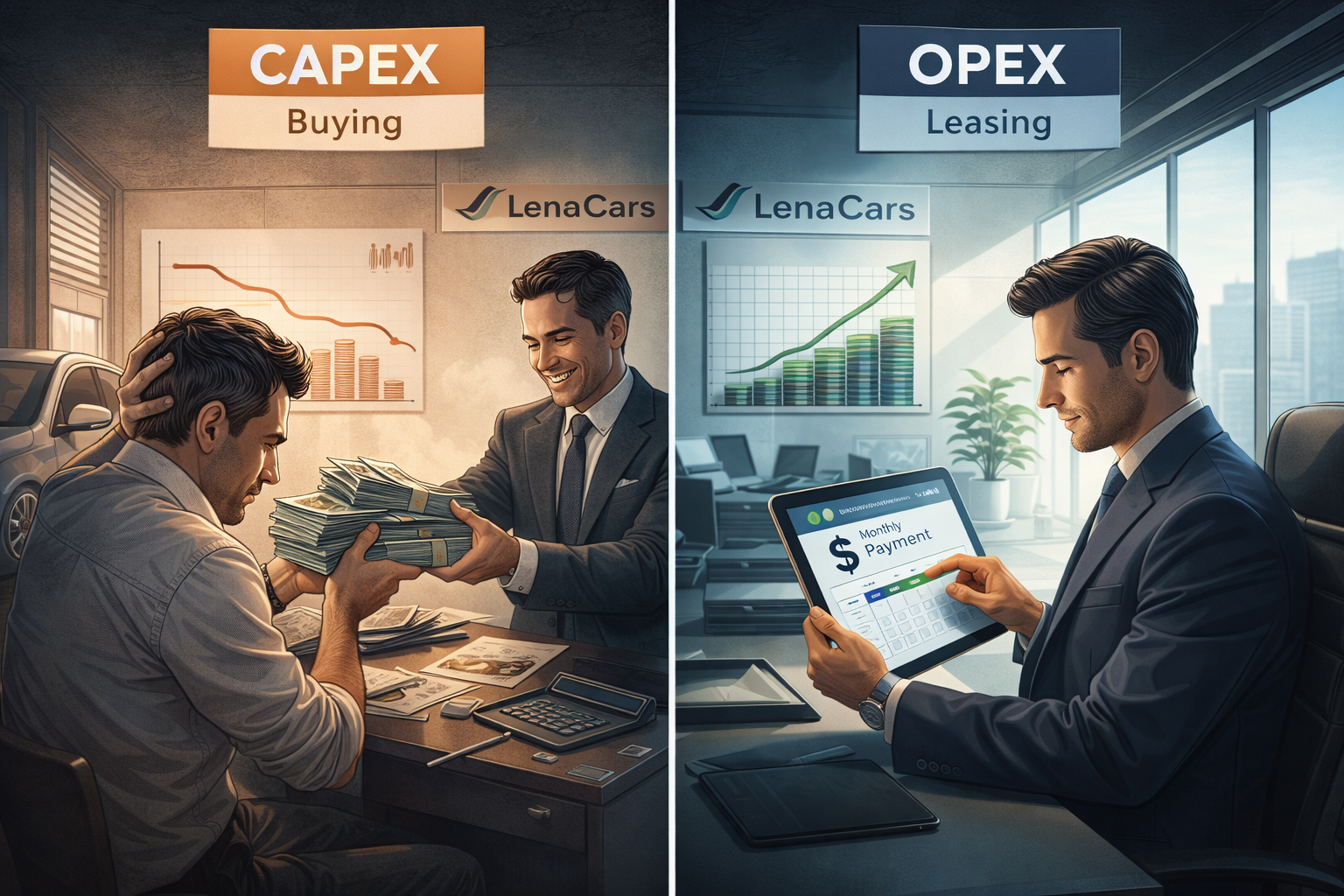
The first question financial algorithms ask is: "How much would you earn if you invested the 3 Million TL you would tie up to buy this vehicle in your core business?" This is called opportunity cost in economics.
- • Depreciation and Capital Binding Fallacy
The system measures the time value of money while calculating the depreciation of the vehicle over the years. The negative score created by tying up capital to the vehicle (CAPEX) in the balance sheet and filling credit limits is compared with the comfort created by fixed monthly lease payments (OPEX) in cash flow. Algorithms prove that staying in cash and transferring vehicle operations to leasing increases company profitability by 15% to 22% in inflationary environments.
- • Used Market Crisis Simulation
It is predicted today how much demand that vehicle will have in the market at the end of the contract (e.g., after 36 months). Suppose there was a sudden change in tax policies (SCT) or a technological leap occurred. If you bought the vehicle, you would write the entire value loss of this crisis as a loss in your company balance sheet.
Leasing mathematics melts these risks in algorithmic pools (Risk Pooling); the leasing user is completely isolated from a possible crisis in the used market or the stress of "I can't sell my vehicle."
4. The Invisible Side of the Iceberg: Reading Hidden Costs
The most ruthless and at the same time most beneficial area of algorithms is the "Total Cost of Ownership" (TCO) analysis. The large amount you pay when buying a vehicle from the dealership is just the small part of an iceberg above the water in the ocean. The real costs start accruing the day the vehicle hits the road, and algorithms see these dark waters very well.
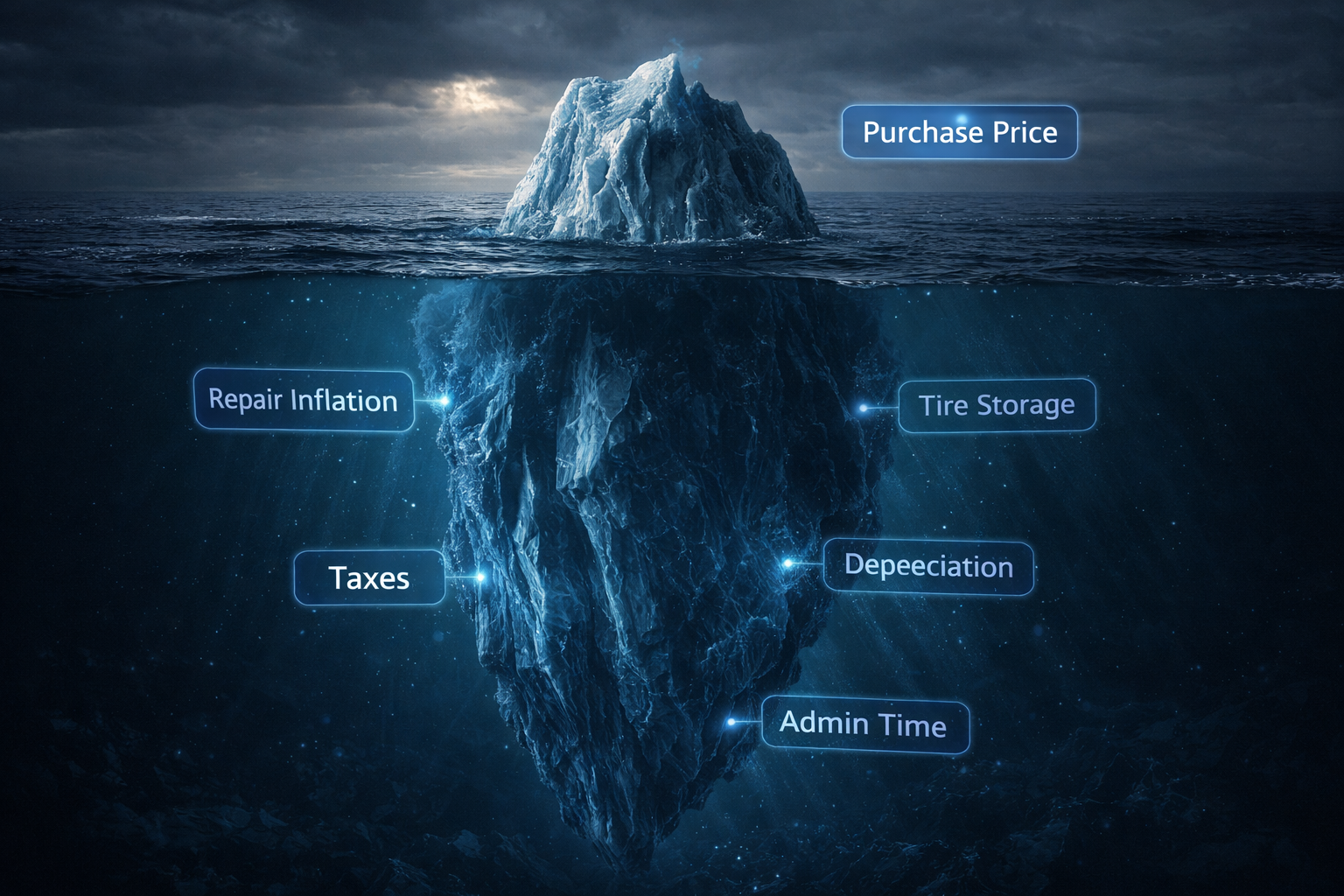
Here are the massive cost items below the water that make leasing advantageous in machine learning models:
- 1. Spare Part Inflation and Supply Crises: Due to chip crises, global logistics bottlenecks, and currency fluctuations, spare part prices are constantly rising. Algorithms project "This vehicle will likely need an EGR valve replacement at 80,000 km" and factor in future possible labor price increases. In leasing, all these surprise costs are fixed and the responsibility of the leasing company.
- 2. Administrative Staff (Human Resource) Waste: When you purchase vehicles, significant time is spent on tracking insurance policies, endless negotiations with adjusters during damage processes, scheduling summer/winter tire changes, storing tires, and tracking MTV payments. Your company's valuable Human Resources or Administrative Affairs staff end up in the position of "fleet manager," leaving their primary duties. When algorithms convert these "lost labor" hours into monetary value, the inefficiency of purchasing becomes evident.
- 3. Lack of Replacement Vehicle (Business Continuity Interruption): When your own vehicle is involved in an accident or the transmission fails, it may sit in the service for weeks. During this process, your sales personnel in the field cannot visit customers, operations halt, and you lose revenue. The "Replacement Vehicle" service offered in professional leasing packages is an invaluable risk shield that guarantees your company's "Business Continuity" in algorithmic calculations.
5. New Generation Data: The Matrix of Electric Vehicles (EV)
The data revolution in the automotive industry has truly entered its golden age with the mainstreaming of Electric Vehicles (EV). Algorithms trying to predict mechanical wear in internal combustion engines have started directly communicating with the chemical structure of batteries in electric vehicles.
The sole determinant of a used EV's value is not how clean its body is, but the health of the lithium-ion battery pack lying at its base. Battery management systems (BMS) of electric vehicles feed incredibly detailed data to our algorithms.
Was the vehicle continuously charged to 100% at high-power DC fast charging stations, or was it used following the %20 - %80 rule on home-type AC units that protect battery health? All specific data such as how many deep discharge cycles (completely depleting the battery) the battery has undergone and cell imbalance between cells are instantly read.
The "SoH" (State of Health) percentage of an electric vehicle, just like the vehicleKey history in internal combustion engines, is the sole price determinant of that vehicle. Your charging habits directly write the future price tag of your car.
🎬 Concept Analysis: The Future of AI, Data, and Automotive
Be sure to check out this enlightening video analysis on how the power of data is fundamentally transforming the automotive industry, predictive maintenance technologies, and companies' vehicle valuation vision.
Conclusion: The Future Belongs to Those Who Can Read Data
In this Matrix that the automotive world is in, buying a used car or establishing a company fleet should no longer be a dice thrown in the dark, a gamble left to chance. Before tying up your business's equity to rapidly depreciating metal masses, you need to see the big picture. Seeing beyond the metal, being able to read the story between the codes in databases and depreciation graphs is a prerequisite for survival in today's competitive conditions.
At LenaCars, we don't just showcase shiny cars in our gallery; we transform the prophecy of massive algorithms working behind us and our data processing power into transparent, reliable consultancy for you. Are you looking for a long-term, tax-advantaged, and risk-free leasing experience? Make your decision not with emotions or old habits, but with the perfect symphony of data, sensors, and intelligent systems.
Let's Run the Right "Algorithm" for Your Company Together
Consult our expert team to find vehicles with the most suitable genetics for your company's cash flow, operational burdens, and growth goals, or to draw the most profitable financial route between purchasing and leasing mathematics.
Contact LenaCars to manage your process from start to finish. The most profitable decision for your company is just a click away.