
Winter Tyres in Turkey 2026-2027: Who Must Use Them, What Is the Fine?
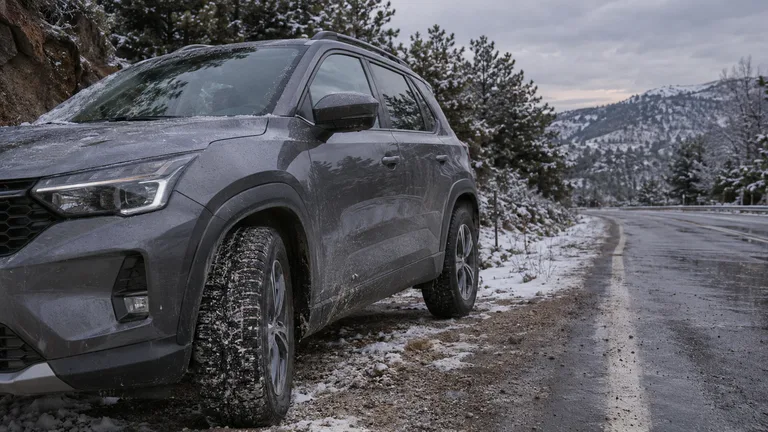
Who do Turkey's winter tyre rules apply to, how much is the fine, and what should you check when renting a car in winter? All your questions in one place.
It happens every year. October ends, car windows start fogging up in the morning, someone drops a message in a WhatsApp group saying "Winter tyres are mandatory now, there's a fine if you don't fit them," and within a week that message has reached a hundred people. Some rush to the tyre shop in a panic, others shrug and say "nothing will happen to me." Both are acting on half the information.
We wrote this piece to clear up some of that confusion. Who does the rule actually apply to, how much is the fine, what should private car owners do, do winter tyres really make a difference, and what should you watch out for if you are renting a car in Turkey this winter? We will go through it all, one step at a time, as plainly as we can.
Grab a tea. This one is a bit long.
1. The Dates: Why a Little Earlier This Year?
For many years the winter tyre period in Turkey started on December 1, and plenty of drivers still have that date in their heads. Things have changed, though. This season the rule starts on Sunday, November 15, 2026 and runs until April 15, 2027.
The change itself is not brand new. The start date was moved to November 15 in 2025, which stretched the mandatory period from four months to five. But habits take time to shift. Last year quite a few commercial vehicle operators missed the change, thinking "there's still time," and found themselves at a roadside checkpoint instead.
The logic is easy to follow. Along the Erzurum, Kars, Sivas and Ağrı line, mid-November is already winter. On mountain passes like Bolu, Sertavul and Zigana, the first snow rarely waits for December. Moving the calendar forward simply brings the rule on paper closer to reality on the road.
2. The Most Misunderstood Part: Does This Apply to My Car?
This matters, because this is exactly where most of those WhatsApp messages get it wrong.
The winter tyre requirement does not apply to everyone. It covers commercial vehicles carrying passengers or goods on intercity highways. That means intercity buses, minibuses, lorries, tractor units and tankers.
Privately used cars fall outside this general requirement. If you drive your own car to work, or take the family to visit relatives at the weekend, you are not legally required to fit winter tyres. A traffic officer cannot stop you and write a fine just because you are on summer tyres.
That is good to know, but hold on a moment. Don't jump straight to "so I don't need them." We will come back to this further down, because there is a big difference between "not mandatory" and "not necessary."
| Vehicle Type | Are Winter Tyres Mandatory? | Penalty Risk |
|---|---|---|
| Intercity passenger vehicles (buses, minibuses) | Yes (November 15 - April 15) | 6,000 TL administrative fine |
| Intercity freight vehicles (lorries, tractor units, tankers) | Yes (November 15 - April 15) | 6,000 TL administrative fine |
| Private cars | No (but strongly recommended) | No winter tyre fine; access may be restricted on snowy roads |
One more thing worth adding: on some roads with snowfall or ice, traffic teams can restrict poorly equipped vehicles from continuing. That is a separate matter from the winter tyre fine. Every winter there are reports of vehicles without chains or suitable tyres being held back or turned around at mountain passes. So as a private driver you may not get fined, but sitting in the middle of the road for hours is not much of an alternative either.
3. How Much Is the Fine, and Who Pays It?
For commercial vehicle operators the figure for this year is clear: operators who do not comply with the winter tyre requirement face an administrative fine of 6,000 TL. The amount was set by a legal amendment that took effect on February 27, 2026.
There is a detail worth noting here: the fine is issued to the vehicle operator, not the driver. So it is not the driver employed by a haulage company who is liable, but the company operating the vehicle. For businesses with fleets, that figure may look small for one vehicle, but across ten or twenty vehicles it adds up quickly.
And the fine is only the visible part. The cost of an accident in winter conditions, insurance procedures, a vehicle off the road, deliveries that miss their deadline... Next to all that, 6,000 TL is almost a footnote.
💡 Note: The Amount May Change After New YearMany fines and fees in Turkey are expected to rise in 2027 in line with the annual revaluation rate. Since the winter tyre season runs until April, fines issued after January may be calculated on the updated amount. Fleet managers would do well to keep an eye on that date.
4. Do Winter Tyres Really Make a Difference?
Now to the real question. As a private car owner you are not required to fit them, fine. But do you need them?
A lot of people think of winter tyres as "snow tyres." We know plenty of people who say, "How many days does it snow in Istanbul anyway? Three days, and I just won't take the car out." It sounds sensible, but it misses a big part of the picture.
What sets winter tyres apart is not only the deeper tread, but the rubber compound. Summer tyres are designed to perform on warm asphalt. As temperatures drop, that rubber hardens, becomes almost plastic-like, and loses its grip on the road. Winter tyre compounds are designed to stay soft in the cold.
💡 The Key Threshold: The 7 Degree RuleOnce the temperature drops below 7°C (about 45°F), the advantage of winter tyres becomes noticeable. Note that there is no snow and no ice in this picture. Just cold. At seven in the morning in November in Ankara, on dry asphalt at 2°C, your braking distance on summer tyres is longer than it would be on winter tyres.
Think of it with an example. The car in front of you brakes suddenly. In summer, your car stops comfortably. Make the same move in January, at the same speed, on the same tyres, and you may feel the car travel a few metres further. Those few metres are often the difference between touching a bumper and not touching it.
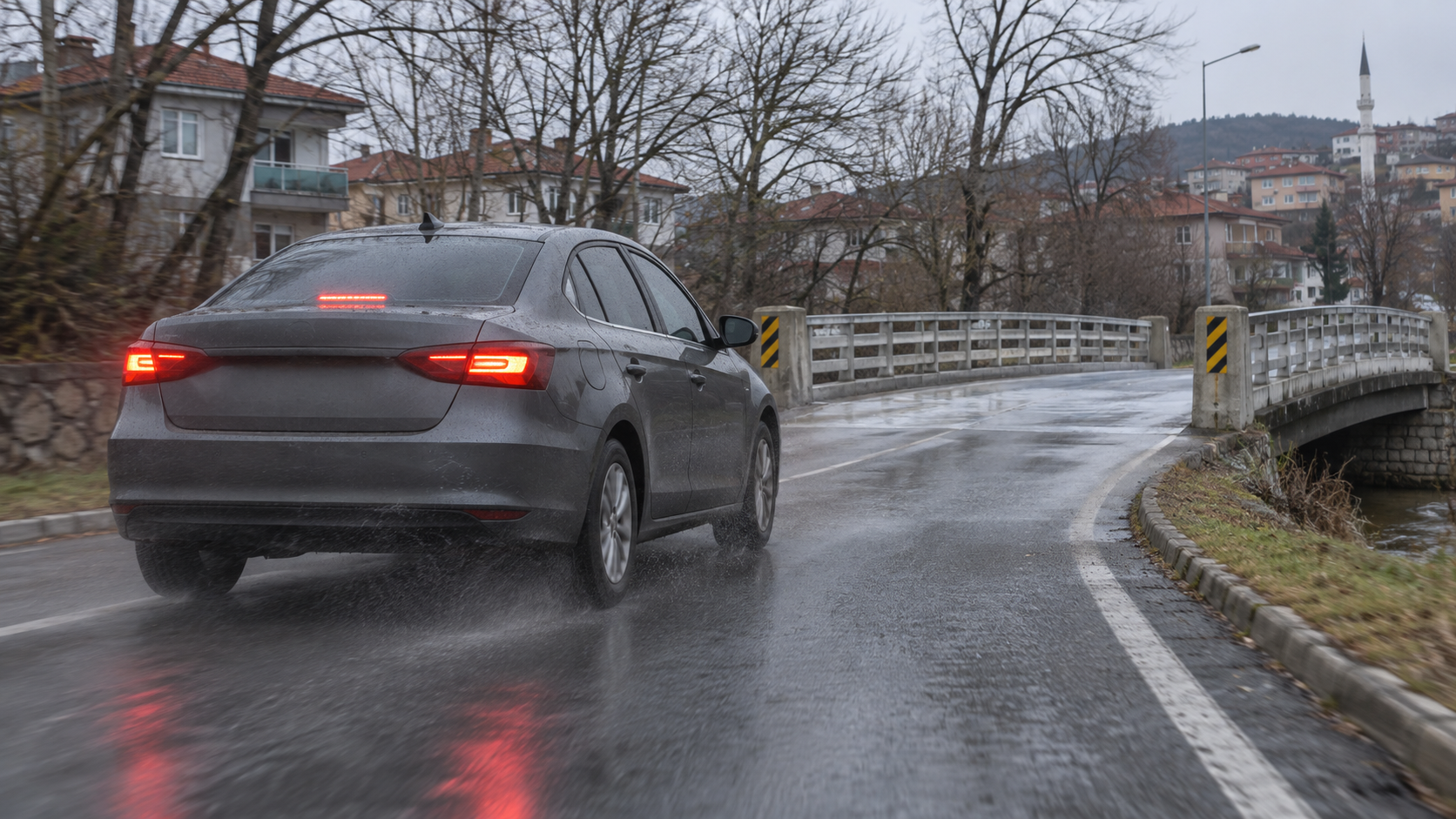
Wet roads, muddy surfaces, the thin layer of ice that forms on frosty mornings... all of these show up without a single snowflake. Bridges and shaded bends in particular can stay slippery even when the rest of the city is dry. Most drivers only notice ice once the back of the car starts to slide.
5. Could All-Season Tyres Be a Middle Ground?
This is one of the most common questions of recent years. All-season tyres are designed to "get by" in both summer and winter. No changing tyres, no storage, no queueing at the tyre shop every November and April.
The honest answer: it depends on how you drive. A few questions can help you decide:
- ✓ City Driving in a Mild Climate: If you mostly drive in places with relatively mild winters, such as Istanbul, Izmir or Antalya, and rarely take long trips, a good all-season tyre can be a reasonable choice.
- ✓ Regular Long Trips and Snowy Regions: If you regularly head to Central Anatolia, the East or the higher parts of the Black Sea region in winter, nothing replaces a proper winter tyre.
- ✓ Ski Trips: For routes to Uludağ, Kartalkaya, Erciyes or Palandöken, winter tyres are a necessity rather than a luxury. Some stretches may also require snow chains.
As the name suggests, an all-season tyre is a compromise. It is not the best in any season, but it is not the worst in any season either.
Another important point is tyre age. You may have winter tyres, but if you have been using them for five or six years, the rubber may have hardened even if the tread depth looks fine. The four-digit production code on the sidewall shows the week and year the tyre was made. It is worth a quick look.
6. Renting a Car in Winter? What to Check
Now for the part that matters most to us. Renting a car in winter comes with its own quirks, and they are often not on anyone's mind at the booking stage.
We all know the classic scenario. Mid-January, school holidays. A group of friends decides to head to Uludağ or Erciyes. Someone looks online, picks the cheapest car, pays. Everyone is excited. Then, twenty kilometres from the resort, it starts snowing and someone asks: "Did this car have winter tyres?"
That question belongs at the booking stage, not on the road. Here are the four things to clarify:
- ✓ Tyres: Does the car have winter tyres, or do you need to request them separately? Some companies fit their whole fleet with winter tyres for the season, others offer them as an extra. If your route goes through snowy areas, don't complete the booking without asking.
- ✓ Snow Chains: Ask whether chains come with the car. If they do, ask the staff to show you how to fit them once at pick-up. Reading an instruction leaflet at minus five, in the snow, wearing gloves, is not a fun experience.
- ✓ Route: Tell them where you are going in advance. The company may suggest a car better suited to that route, such as a four-wheel-drive model or an SUV with more ground clearance. Discussing your route up front also helps avoid disagreements later.
- ✓ Cover: Tyre punctures, wheel damage, scraping a kerb on ice or underbody damage often fall outside standard cover. Reading what each package includes takes five minutes; not reading it can cost far more.
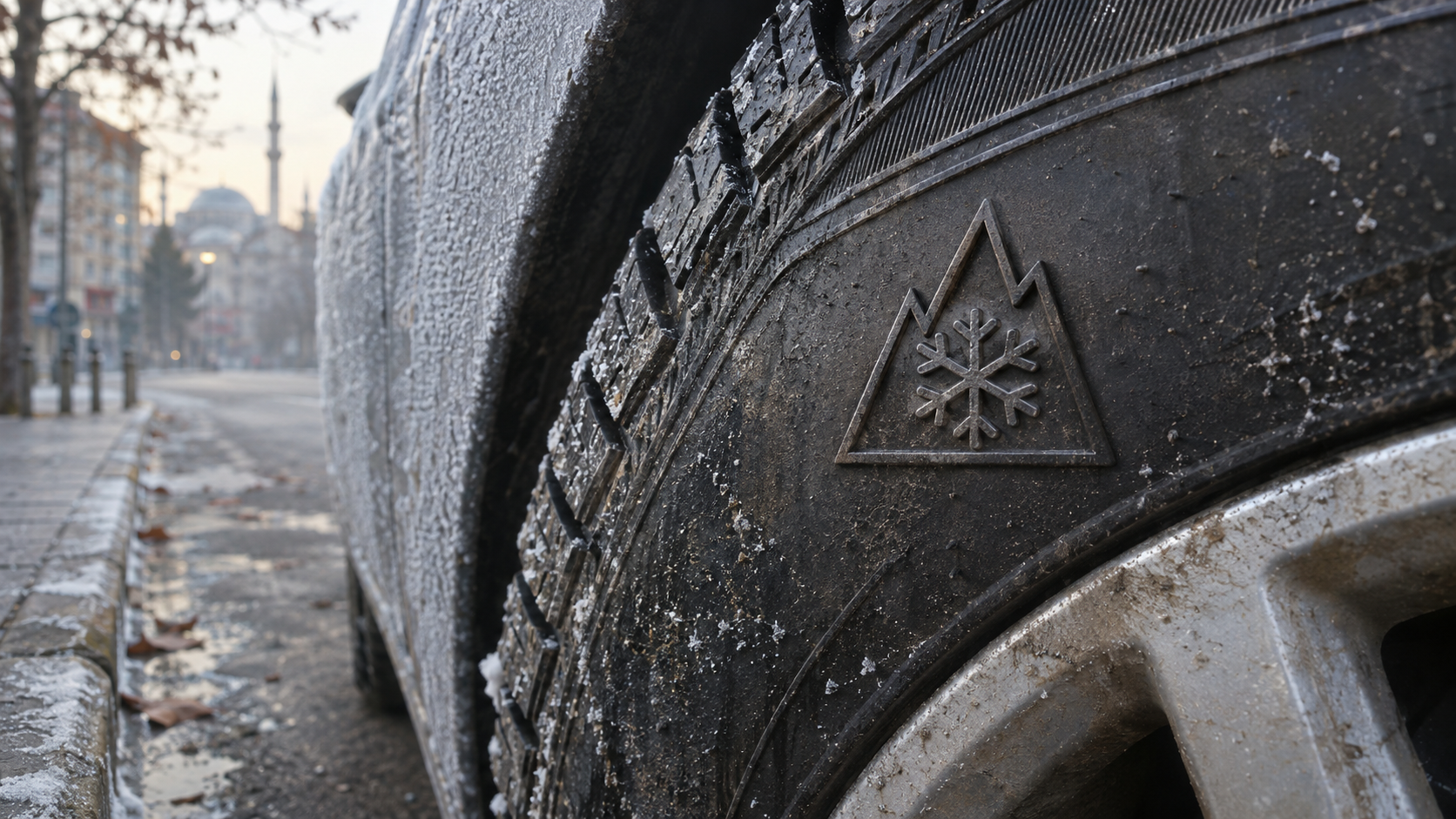
Check the tyre sidewalls for the snowflake and mountain symbol, which shows the tyre is certified for winter conditions. Make sure the washer fluid contains antifreeze, since plain water freezes below zero. Check the wipers. And as always, walk slowly around the car and record a video. Small scratches are hard to see on a wet, snowy car, so asking for a clean car at pick-up is a perfectly reasonable request.
7. Heading to the Slopes in a Rental Car
Rather than another list, let's just talk this through, because these are the things people most often forget.
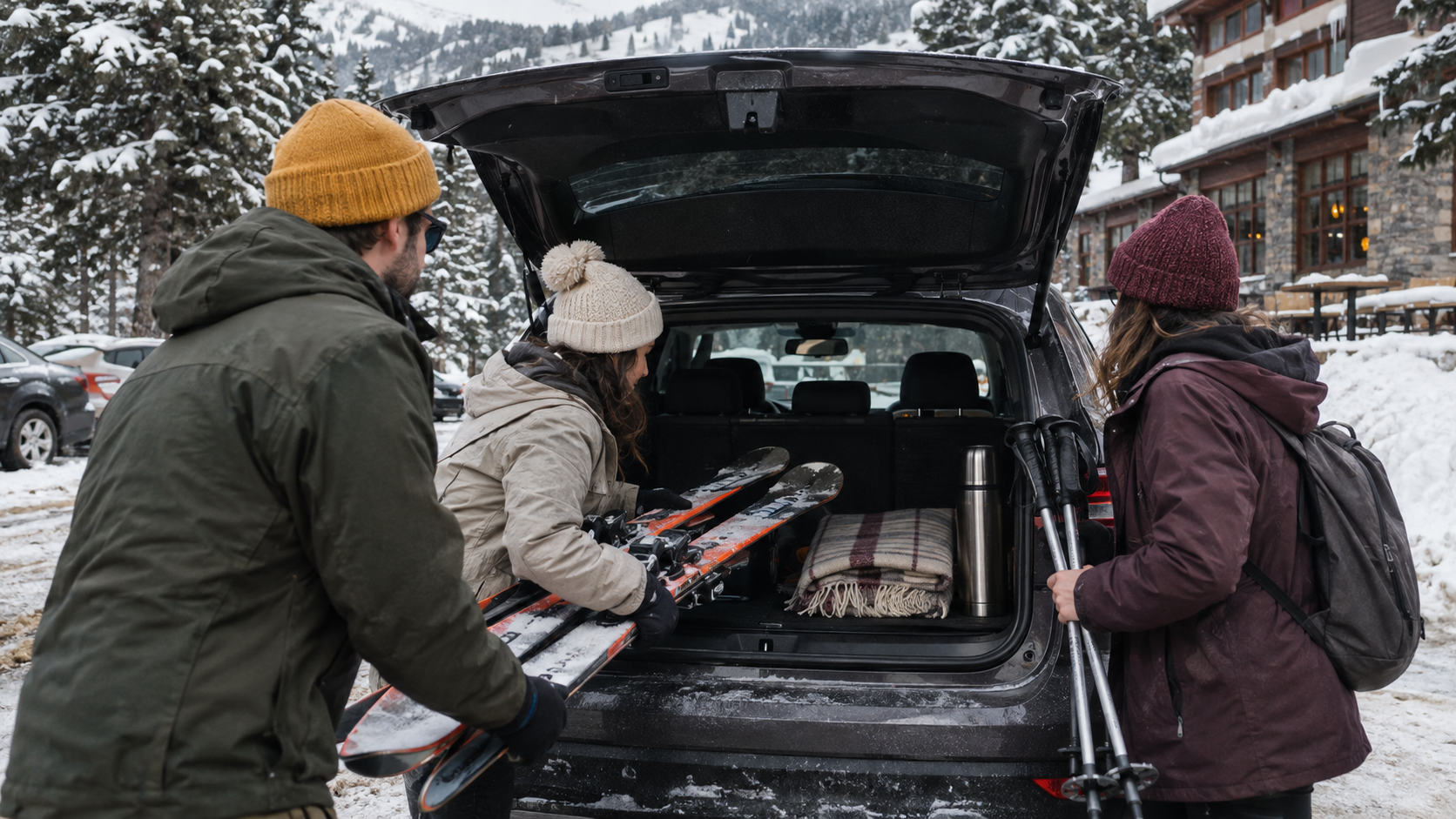
Put a blanket in the boot before you set off. Sounds excessive, doesn't it? Until you spend two hours waiting at a pass because a lorry has slid across the road ahead. A flask of hot tea or a few bottles of water, a cable to charge your phone in the car and a small torch belong in the same "seems excessive, saves the day" category.
Try not to let the fuel tank drop below half. If you get stuck in snow you may need to run the engine now and then to keep warm, and petrol stations on mountain roads can be further apart than you expect. If you are driving an electric car, factor in the range lost to the cold and plan your charging stops in advance.
Check the weather not only for your destination but for the whole route. Uludağ may be sunny while fog sits on the climb out of Bursa. Following the road condition updates from Turkey's General Directorate of Highways (Karayolları) is a good habit.
And finally, don't rush. There is no reason to speed on a mountain road in winter in a car you are not used to. Planning to arrive an hour later means spending the first day of your holiday at the hotel instead of on the road.
8. A Few Notes for Companies with Commercial Fleets
Some readers of this piece may be on the corporate side rather than the personal one. For companies doing intercity deliveries or service work, winter tyres are a legal obligation, not a choice.
The most common mistake here is leaving the tyre change to the last week. Anyone who has seen the queues outside tyre shops in the second week of November knows what we mean. Booking early and planning across the whole fleet saves both time and money.
For companies using vehicles on long-term lease, it is also worth raising this with the leasing company ahead of time. Are winter tyre changes, storage and fitting appointments included in the package, or do they need to be arranged separately? Having that conversation in October is far better than scrambling in November.
Conclusion: Look at the Road, Not Just the Rulebook
If we had to squeeze the whole topic into a few sentences: winter tyres are mandatory for intercity commercial passenger and freight vehicles from November 15 to April 15, with a 6,000 TL fine for non-compliance. There is no legal requirement for private cars. But once the temperature drops below 7°C, snow or no snow, summer tyres are not as reliable as they used to be.
If you are heading off on a winter trip in a rental car, our one piece of advice is this: ask your questions when you book, not on the road. Tyres, chains, route and cover. Once those four are settled, the rest is just enjoying the snowy mountains, the hot chocolate and the views.
Safe travels, and have an accident-free winter.
Hit the Road in a Winter-Ready Car
Whether you want to rent a car for your winter holiday or manage your company fleet through long-term leasing with tyres, maintenance and damage management included, the LenaCars team is ready to help you find the right vehicle for your route and needs.
Explore Our Rental Offers