Credit Card Era in EV Charging: EPDK New Regulation
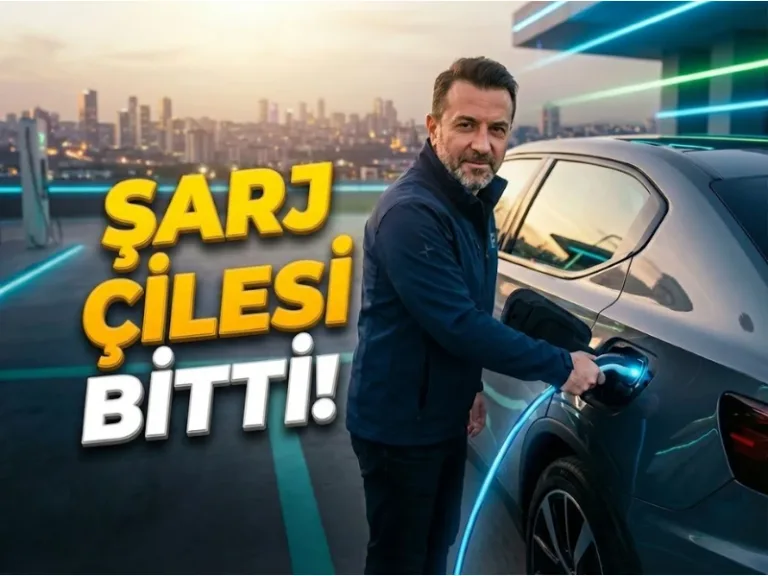
The biggest hassle for electric vehicle owners is ending! With EPDK's new regulation, the obligation to download apps at charging stations is lifted, and the credit card payment era begins.

The "payment system chaos" that electric vehicle owners have been voicing for years is finally reaching an official solution. According to the new regulation draft prepared by EPDK, planned to enter into force at full capacity as of 2026, having a physical POS device at all public fast charging (DC) stations is being made mandatory.
While charging infrastructure and payment systems change this rapidly, buying an electric vehicle and shouldering all these "transition period" pains alone is a financial burden. The new regulation is not limited to "credit card"; a massive package awaits drivers from station occupancy rates to "mobile charging" units to be sent to stranded vehicles. Let's examine the technical anatomy of this 4-item big plan that will fundamentally change the electric driving experience.

The Credit Card Era in Charging Begins
In the current system, when you go to a station, your phone's internet may not work, your app may not be up to date, or you may not have a balance in your wallet. With the new regulation, all these scenarios go into the trash. A physical POS device and contactless payment screen become mandatory at fast charging (DC) stations.
Two motivations are behind this change: on the one hand supporting tourism (acceptance of foreign cards), on the other hand solving the "roaming" chaos between operators. The driver will be able to experience the same experience regardless of which brand's station they are at.
EPDK's 4-Item Big Plan 📋
The regulation targets not only payment methods but also the efficiency and safety of the entire charging ecosystem. Here are those items that will save drivers' lives:
-
🚀 1. Credit Card and POS Standard
Card readers will be mandatory at all DC (fast charging) units of 22 kW and above. This way, roaming problems (transitions between operators) will become history.
-
⚖️ 2. 85% Fair Use and Efficiency Rule
Due to the nature of lithium batteries, charging speed drops dramatically after 85% (trickle charge). To prevent long queues at stations, operators will be able to automatically end the charging of vehicles reaching 85% occupancy and move to the next vehicle. This will increase capacity at highway stations by 40%.
-
🚑 3. Mobile Charging and Roadside Assistance Support
An end to range anxiety! Licensing and expansion of mobile charging vehicles that will reach drivers running out of charge from the nearest point and give them "emergency breath" becomes mandatory.
-
📞 4. 24/7 Live Support and Technical Intervention
If the station is broken or the cable is stuck, you will find not just a robot but a live counterpart serving 24/7. Operators will be responsible for intervening in technical issues within specified periods.

User Experience (UX) Analysis: Old vs. New Era 📊
| Process | Current (App Requirement) | New (Credit Card Era) |
|---|---|---|
| Membership Requirement | Separate GDPR consent and registration process for each brand. | Membership-free: Ability to charge like a guest. |
| Payment Speed | QR scanning, app freezing, password entry (2-5 min). | In Seconds: Tap contactless card and start (5 sec). |
| Financial Freedom | Requirement to load prepaid balance into wallets. | Direct Payment: Pay only what you consume. |
| Security & Data | Sharing location and personal data with operators. | Anonymity: With banking security, transaction without sharing data. |
Where Are We in Turkey's Charging Infrastructure?
According to Energy Market Regulatory Authority (EPDK) data, the number of public charging sockets in Turkey has made a significant leap in the last two years. According to ministry reports, the socket count exceeding 20,000 by end of 2024 targets the 50,000 band in 2026 goals. Two main dynamics with the largest share in this expansion can be summarized as follows:
- DC fast charging expansion: DC units of 22 kW and above concentrate especially at highway rest facilities to reduce intercity range anxiety. 150-360 kW ultra-fast units are installed on main arteries.
- Operator diversity: With big operators like ZES, Eşarj, Trugo, Voltrun; along with new entrants like PowerYou, Astor, the market is being structured. While this diversity increases price competition, it differentiates the user experience per app — the credit card requirement will eliminate this difference.
For comprehensive information on charging station selection and types, you can look at our charging station selection guide.
What Does the New Era Do for Long-Range EVs?
As range increases, daily charging frequency decreases, but when doing long trips, fast charging gains critical importance. For EVs with factory range of 500-700 km, a single breakdown or payment problem on the highway can disrupt the entire journey plan. The credit card requirement, 85% rule, and mobile charging support will significantly reduce such disruptions.
For the current leaders of the segment, you can review our longest-range EVs of 2026 article; and for systems affecting range decline in winter, you can look at our heat pump explanation.
Charging Management in Leased Electric Vehicles
In long-term leasing, when you receive the vehicle, the "you bind your card, you install your app" model is simplified. With the new regulation, in leased EVs, there will be no need for a separate wallet or operator card for charging; you will be able to stop at any station on the roadside with your personal bank card and pay the bill directly from your pocket.
This also carries meaning of transformation for corporate fleet management: company cards or corporate fuel-charging cards merge in a single POS ecosystem, facilitating accounting processes. For details, you can look at our corporate EV fleet solutions.
FAQ on Charging Stations and the New Regulation
Will there be a price difference in credit card payments?
Generally, operators will continue to offer discounted tariffs between 5-10% to their loyal members (app users). Charging as a "Guest User" with a credit card may be calculated over the standard (ceiling) list price. However, the speed and convenience it offers in emergencies is far above this difference.
Will foreign credit cards work at stations?
Yes, one of the biggest targets of this regulation is tourism. Foreign tourists coming to Turkey with their electric vehicle or renting a vehicle from Turkey will be able to use all stations with their Visa/Mastercard-logo cards without having to download local apps.
Will the 85% rule harm my battery?
On the contrary, it is the best for battery health. Constantly charging lithium-ion batteries to 100% and keeping them at 100% shortens the battery's life. EPDK's rule both increases station efficiency and helps unconscious users preserve battery health (SOH).
When will existing stations be fitted with POS devices?
For newly built or upgraded stations, the requirement takes effect from 1 July 2026. Existing, already-installed stations are given an extra year to complete the transition, needing to add POS or integrated card payment by 30 June 2027. After that date, the licences of DC stations still without card payment will be at risk.
Who pays the charging fee in leased electric vehicles?
When you rent a vehicle from LenaCars, as with fuel vehicles, the charging fee belongs to the user. However, thanks to the credit card revolution, you will now be able to experience the world's easiest charging experience with your own personal card, without us needing to define any card or app for you.
Other Changes Under the New Regulation 📋
| Provision | What changes |
|---|---|
| Single price / no extra fees | Charging fees will be based solely on energy consumed (TL/kWh); connection or session-start fees are banned |
| Roaming | Agreements between different charging networks now require EPDK notification, making it easier to switch between networks |
| Mobile charging stations | Can now be operated by licensed companies, providing backup during peak periods or emergencies |
| 85% charge cutoff rule | Applies only to DC stations of 50 kW and above; there is no such rule for AC (slow) charging |
| Price cap | Not currently planned; EPDK favours free competition but reserves the right to intervene if consumers are harmed |
What these provisions have in common is bringing the charging experience closer to the standard of a fuel station. Most of the complaints users have raised — mandatory apps, station hogging, and a lack of price transparency — are directly targeted by this regulation.
Discover EV Convenience with LenaCars ⚡
If charging is now as easy as buying gasoline, there is no obstacle left to stepping into the electric world. Don't take the risk of purchase to test the technology's newest standards with the most modern electric vehicle models (Tesla, Togg, BYD, Skywell). Lease whichever you want from LenaCars' fully maintained, sanitized, and charge-friendly electric fleet; drive the future's mobility today with convenience.
Explore the Electric Fleet →Corporate EV Fleet Solutions📞 24/7 Uninterrupted Support Line